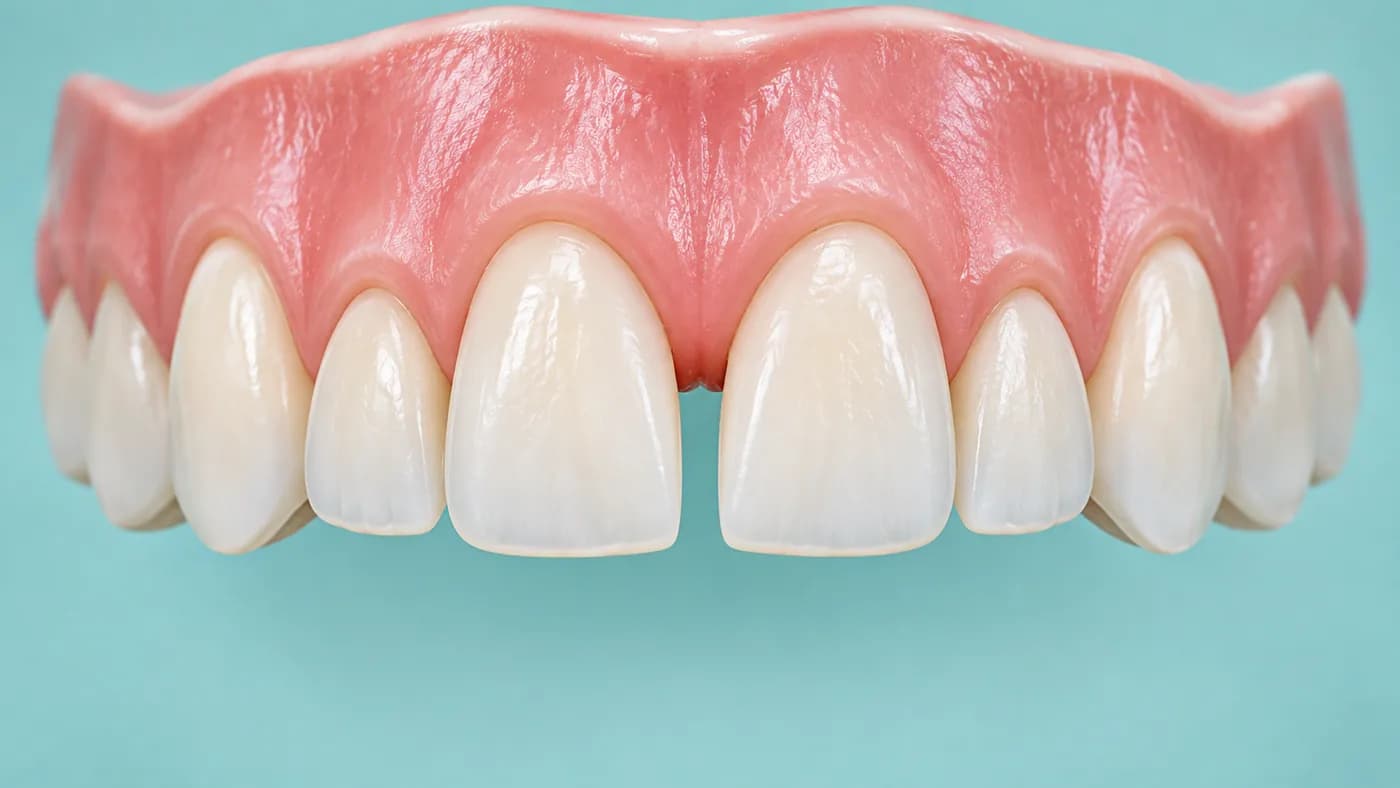
A gap between teeth can be a natural feature related to tooth size and jaw shape. Newly developing spaces also call for assessment of missing teeth and supporting tissues. Decisions should consider the cause, tooth position and gum health, not appearance alone.
The history of the gap can change the choice
A longstanding childhood space and a gap newly opening or widening in adulthood need different assessment. Earlier photographs can help establish when things changed. Mention bleeding, tooth movement or a changed bite together; the supporting tissues should be assessed first when indicated.
Closing a small space with composite makes a tooth wider, while orthodontics changes its position. Ask which approach suits appearance, cleaning and the bite. The plan should also address what is needed to reduce reopening afterwards. Do not move teeth at home with strings or rubber bands. Uncontrolled force can damage the supporting tissues, and an apparently small space does not make unsupervised movement safe.
How Are Tooth Gaps Evaluated?
Oral examination
Tooth position
Jaw structure
Gum condition
Patient expectations
Compare options according to the cause
Orthodontics may be considered when teeth need moving; restorative options such as bonding can change tooth proportions in suitable small gaps. Missing teeth or gum disease need attention when present.
Not every gap has to be closed. Ask whether an option removes healthy tooth tissue, what maintenance is involved and how the result is retained. Do not try to pull teeth together with rubber bands at home.
Is a newly opening gap only a cosmetic issue?
Not always. A gap with tooth movement, bleeding gums or a changed bite calls for assessment of the supporting tissues. Investigate the cause before considering cosmetic treatment.