Implants can function for many years, but there is no fixed lifespan or lifetime guarantee that applies to everyone. Outcomes are related to the health of the surrounding tissues, daily cleaning, smoking, overall health and regular reviews. The implant in the bone and the crown or prosthesis above it also have different maintenance and replacement needs.
Which part does “implant lifespan” mean?
The implant body in the bone, connecting components and visible tooth or prosthesis work together. A crown may need repairing while the implant remains healthy in place. A loose screw or chipped veneer does not necessarily mean the implant body has been lost. An examination identifies which part has a problem.
“Survival” in research means that the implant is still present at follow-up. It does not mean there have been no problems or that maintenance will be unnecessary. A study's follow-up period should not be treated as an expiry date either. An individual assessment considers both function and the health of the surrounding tissues.
What influences long-term outcomes?
Bacterial plaque around an implant can cause tissue inflammation. Inflammation may be limited to the soft tissues; when bone loss is involved, a different treatment approach is needed. A history of gum disease, smoking, inadequate cleaning and medical conditions are considered together in the care plan.
The prosthesis should allow cleaning, and the bite needs assessment too. Tell your dentist about clenching or grinding. An examination determines whether a protective appliance is appropriate. The same product is not needed by every patient, and no single product should be expected to prevent all problems.
How is daily care organised?
1. Brushing and cleaning between the teeth
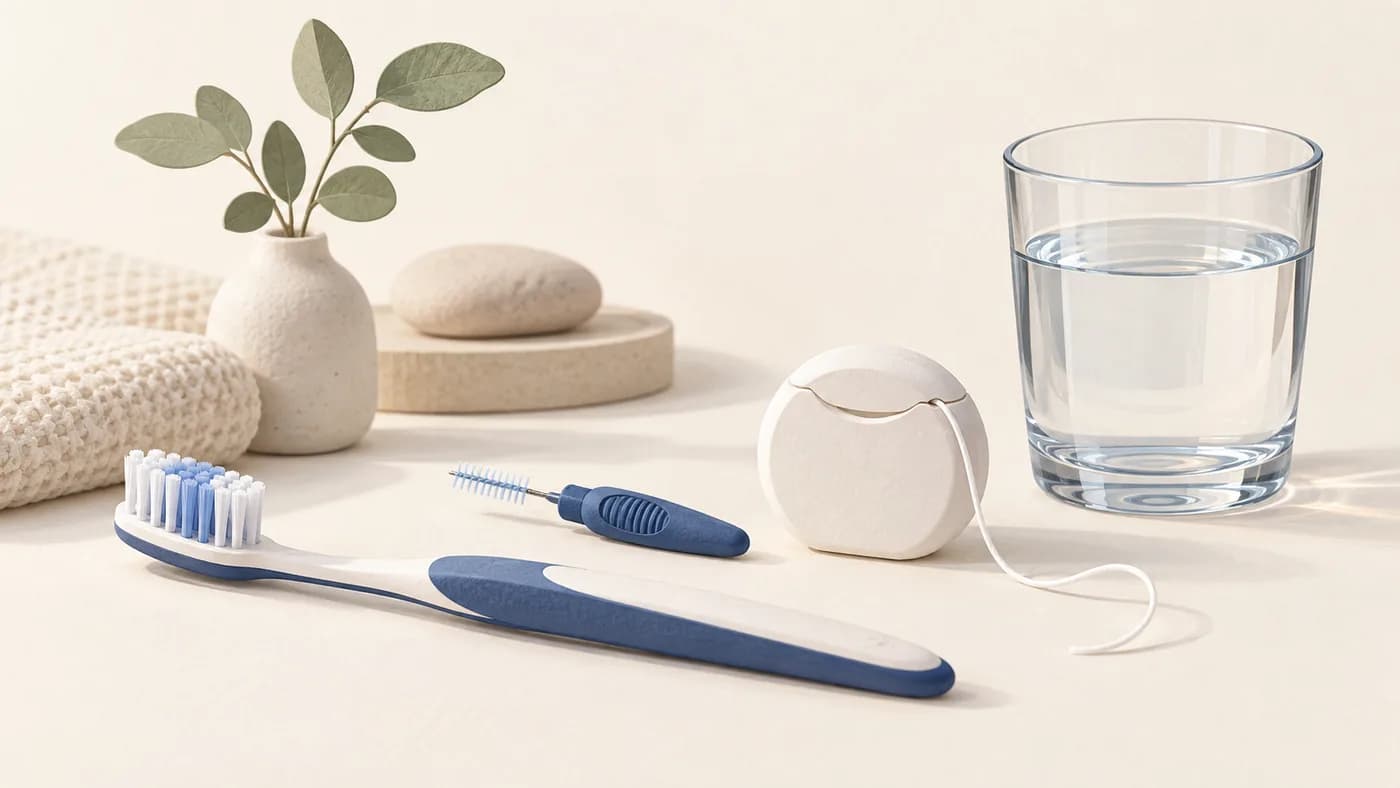
Once healing is complete, everyday care includes regular cleaning around the implant and of remaining teeth. The plan usually includes brushing twice a day and daily interdental cleaning. Interdental brushes, suitable implant floss or other aids are selected for the shape of the prosthesis. Learn how to use them with a demonstration in your own mouth.
2. Identify areas you cannot reach
Not being able to see beneath a prosthesis, pass a cleaning aid through or clean comfortably matters. Review the method with your dentist instead of forcing an aid into place. If a water flosser or mouthwash is recommended, it forms part of your personal plan; do not assume that it replaces mechanical cleaning. Follow postoperative instructions for a newly operated area.
3. Monitor tobacco use and changes in health
If you use tobacco, discuss cessation support. Mention diabetes, new medicines and changes in overall health during reviews. These details remain important after treatment is complete. If your routine becomes difficult to manage, mentioning this early helps adapt the plan to daily life.
What happens at reviews?
Your dentist assesses the tissues around the implant, cleanliness, bleeding, the prosthesis and the bite. Comparisons with baseline records help show changes over time. X-rays are requested when needed. The same imaging at every visit or the same review interval for everyone is not compulsory; frequency is based on individual risks.
Keep the implant's brand and model information, treatment dates and care instructions. If you need a review in another city or country, having records available to share is useful. Long-term care should not be considered only in terms of the original treatment location: discuss an accessible maintenance plan from the start.
Which signs should not wait until the next review?
Contact your dentist about repeated bleeding, redness, swelling, discharge, a persistent unpleasant taste, pain or a tooth that feels loose. Absence of pain does not confirm healthy tissues. Do not try to tighten or glue a loose component yourself; a problem with the implant body needs to be distinguished from a problem with the restoration.
Frequently asked questions
Can an implant get tooth decay?
The implant body does not decay like a natural tooth. However, surrounding tissues can develop disease, and remaining natural teeth can develop decay. Cleaning is still necessary.
Must the replacement tooth be changed after a set number of years?
No. Replacement depends on wear, damage, fit and the clinical condition, rather than a calendar date.
Do I need reviews if I do not notice a problem?
Yes. Some changes develop without obvious symptoms. Regular examination and an individual maintenance plan are part of long-term care.
This guide provides general information. See appointment information to review your care plan or explore other implant topics on the blog.