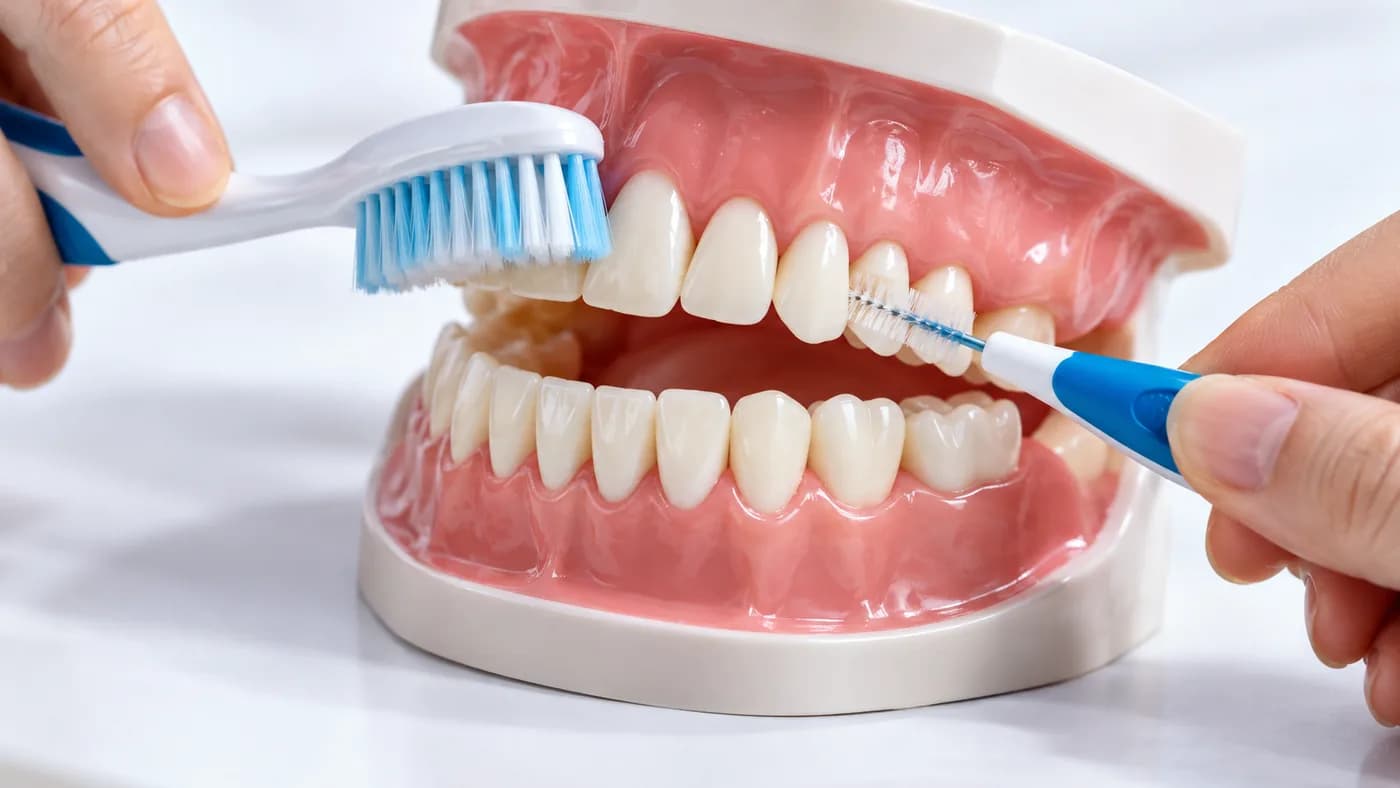
Daily gum care centres on removing plaque from the gumline and between teeth. Brushing twice a day with fluoride toothpaste and cleaning between teeth each day work together. Persistent bleeding, swelling or bad breath should not simply be masked with more mouthwash.
A practical daily care routine
Brush Gently clean all surfaces with fluoride toothpaste without excessive pressure.
Clean between teeth Learn a suitable tool and technique; do not force the tool.
Notice changes Note recurrent bleeding, swelling or looseness.
Seek assessment Have persistent signs checked rather than trying harder cleaning.
Put daily care into a practical sequence
Brush all tooth surfaces and the gum line gently, and clean between teeth with a suitable tool. Gaps differ in size, so one tool does not fit every mouth. Learn the size and technique rather than forcing an interdental brush through or snapping floss into the gum.
If bleeding appears when starting a routine, do not simply scrub harder or stop altogether. Show persistent bleeding and swelling at an examination. The clinician should explain which areas need follow-up and how care should change. Dentures, bridges and implants may require different access methods. Practising with the tool you actually use helps turn advice into a routine you can sustain at home.
What Signs May Indicate Gum Problems?
Bleeding during brushing
Redness
Sensitivity
Swelling
Bad breath
Keep cleaning gently and assess persistent bleeding
Use a soft brush without excessive pressure and clean all tooth surfaces. Ask which size of interdental brush or type of floss suits your mouth. Mouthwash does not replace physical cleaning; use specialised products as directed.
Do not scrape tartar off at home. Rather than stopping all cleaning because gums bleed, continue gentle care and arrange a dental assessment. Review intervals depend on your gum condition and individual risk.
Are painless gums necessarily healthy?
No. Gum disease may progress without obvious pain. Repeated bleeding, recession, loose teeth or persistent bad breath are reasons for an examination.