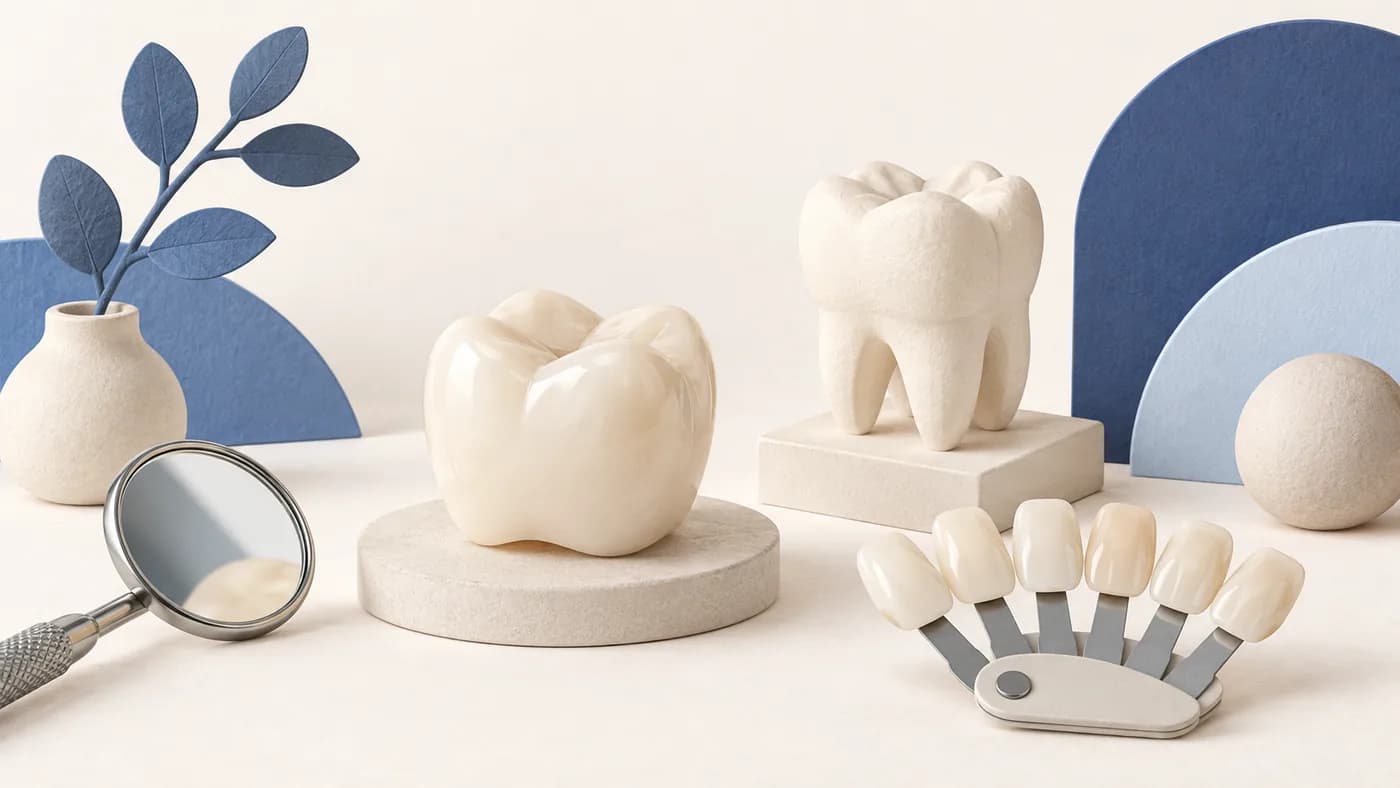
Choosing between a zirconia crown and a veneer involves more than the colour you would like. Remaining healthy tooth tissue, existing fillings or fractures, the bite and gum health are assessed together. A veneer mainly covers the front surface; a crown surrounds the tooth. The same procedure is not needed for every tooth.
Why can the names be confusing?
People sometimes use “covering” for several different treatments. Zirconia describes a ceramic material, whereas a veneer describes a thin restoration placed on the front of a tooth. It is therefore useful to distinguish the material from the type of restoration. Ask whether the proposed treatment is a full crown or a front-surface veneer. The plan should also make clear how many teeth are involved and why.
Which needs suggest which option?
A crown may be considered when a tooth has a large filling, a fracture or substantial loss of structure and needs surrounding coverage. A veneer may be considered for selected shape or colour concerns on a front tooth with sufficient healthy tissue. These explanations do not replace an examination: two teeth that look similar can have different internal structures and loading conditions.
The amount of enamel, previous restorations, tooth position and contact between upper and lower teeth all matter. Tell your dentist if you clench or grind your teeth. A material described as stronger cannot, by itself, correct an unsuitable bite or design. The aim is to meet the tooth’s needs without unnecessarily reducing it.
Which alternatives should be discussed first?
A crown or veneer is not always needed for the change you want. For suitable patients, whitening, composite repair or orthodontic adjustment may be considered. Leaving a tooth untreated may also be reasonable. Decay and gum problems are addressed first, so that appearance is planned on a healthy foundation.
A photograph of a smile you like helps explain your expectations but does not mean that the same appearance can be achieved for everyone. Your starting tooth shade, lip line and existing anatomy influence the result. Asking about the limits of the proposed approach makes the decision easier.
How do preparation, trying in and approval work?
Following the examination, any necessary records are taken and the intended shape and shade are discussed. Where appropriate, a preliminary design or trial can be used. “No tooth reduction” is not a promise that applies to every patient. Treatment involving removal of tooth tissue is irreversible; the planned preparation should be explained for your particular case.
During a try-in, consider more than whiteness. Explain how things feel when you speak, smile and close your teeth together. Mention any area that seems too long, bulky or noticeable before permanent bonding. The number of appointments may depend on the tooth’s condition, the need for a temporary restoration and laboratory stages.
Care and follow-up
Crowns and veneers do not replace daily cleaning. The tooth–gum junction and spaces between teeth need regular care. Discuss biting hard objects, nail biting and clenching with your dentist. A protective plan can be considered when needed. No restoration should be described as lasting a lifetime without an individual assessment.
Request a check if a new restoration feels high when biting, sensitivity continues or the gums bleed. Do not simply regard these as normal problems you must get used to. Your dentist should assess their cause and whether an adjustment is needed.
Short questions to ask at your examination
Why do you recommend a crown or veneer for this particular tooth?
Is there another option involving less tooth reduction?
At what stage will we assess shade and shape together?
What is the plan for care, possible repairs and follow-up?
Frequently asked questions
Can every tooth have a veneer?
No. Tooth structure, previous restorations, the bite and gum health affect the choice. Suitability of the existing tooth is assessed first.
Is a zirconia crown always better?
There is no single option that is better for everyone. The material is selected together with the tooth’s needs and restoration design.
Should all my healthy teeth be crowned?
This is not an automatic requirement. Each tooth is considered individually, and alternatives that preserve healthy structure are discussed.