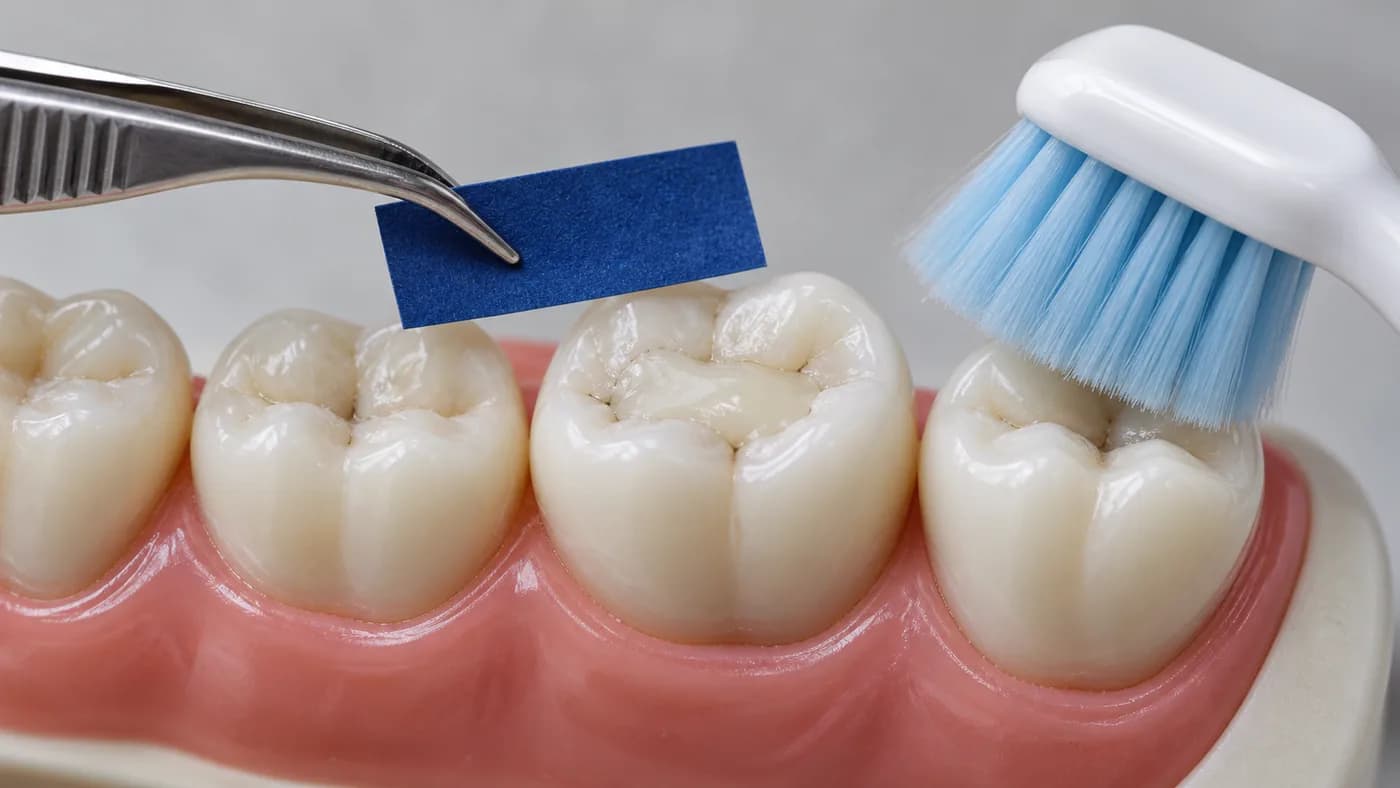
Eating and care advice after a filling depends on the material and anaesthetic used. Avoid accidentally biting your cheek or tongue while numb, and report a filling that seems to touch before your other teeth.
Eating, brushing and flossing after a filling
While numbness remains, you may bite the lip, cheek or tongue without noticing, and may misjudge hot food. When you can eat depends on the filling material and anaesthetic instructions. Follow the timing you were given rather than testing the filling with something hard.
Note floss that repeatedly catches or shreds and food that packs beside the filling. A tooth that contacts before the others may need bite adjustment; do not wait for pain to become severe. If the filling is temporary, confirm completion and what to do if it falls out. A filled tooth can develop new decay, so cleaning should include the restoration's junction with the tooth as well as its visible surface.
Can Sensitivity Occur After a Dental Filling?
Some patients may experience temporary sensitivity after a filling.
When consuming cold drinks
With hot foods
During chewing
When pressure is applied to the filled tooth
The duration of sensitivity may vary depending on the tooth and individual conditions.
How Should Eating Habits Be Managed After a Filling?
After a filling, it may be helpful to avoid putting excessive pressure on the treated tooth.
Be careful with very hard foods
Avoid extreme temperatures if sensitivity occurs
Avoid excessive pressure on the treated area
Maintain balanced nutrition
How Should a Filled Tooth Be Maintained?
Proper oral care is important for maintaining the health of a filled tooth.
Regular brushing
Cleaning between teeth
Maintaining oral hygiene
Attending dental check-ups
A filled tooth still requires regular care and monitoring.
When Should You Contact a Dentist After a Filling?
These sources provide general background and do not replace an individual examination. Appointment, payment and emergency-service arrangements in other countries may differ from those in Türkiye.