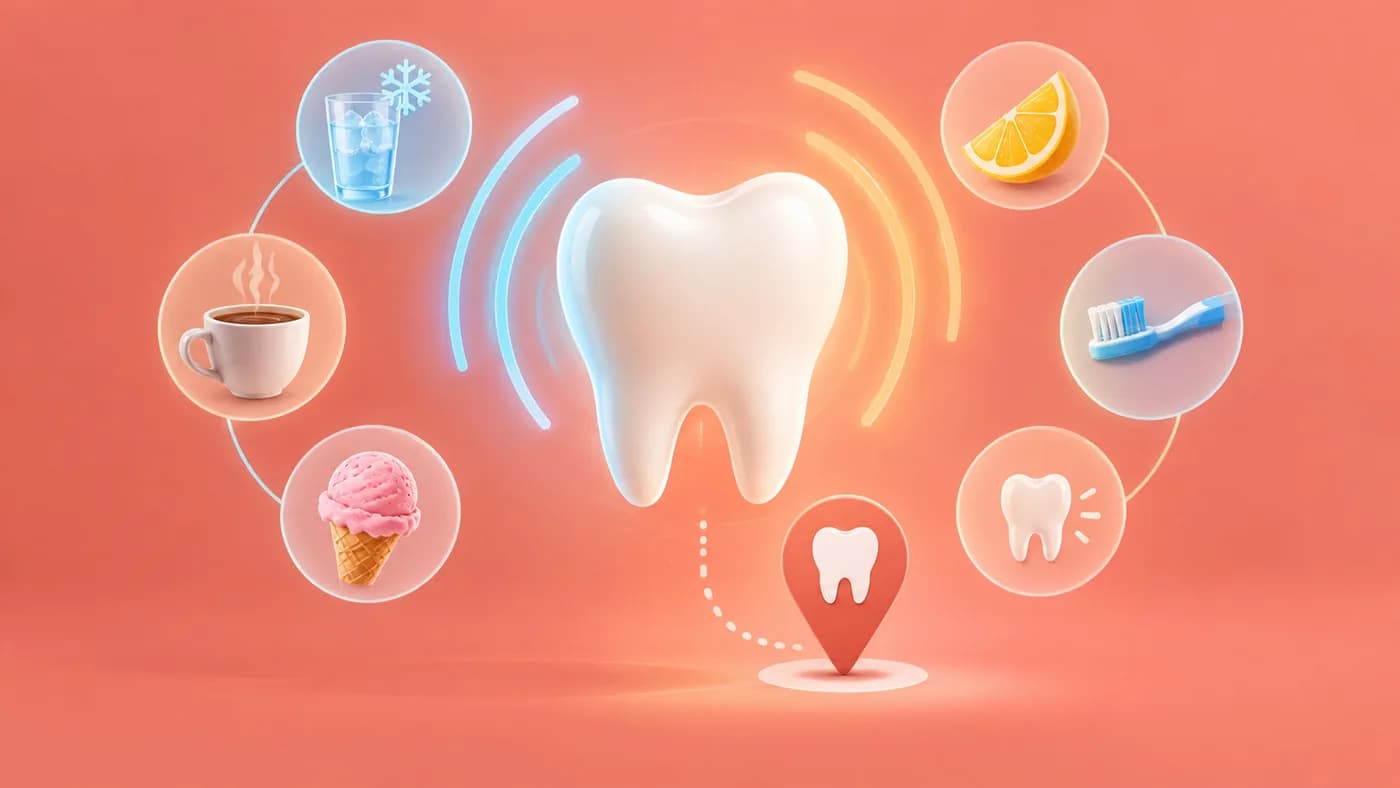
Record triggers and how long discomfort lasts instead of repeatedly switching products. Continue gentle oral care while arranging assessment of the cause; do not delay a review for spontaneous pain, swelling or worsening symptoms.
Example sensitivity diary
Which area? … / Trigger such as cold, heat or biting? … / How long after contact ends? … / Does it happen spontaneously or at night? … / Has it changed recently? …
Do not repeatedly test the tooth to provoke symptoms. The note helps communication at examination; it cannot identify the cause on its own.
What to record in a sensitivity diary
Note the tooth or area, whether cold, heat or touch triggers it and how long it continues after the trigger stops. Mention pain beginning by itself or during the night separately. These details do not diagnose at home, but help distinguish possible causes during examination.
Why temperatures may feel more intense
Surfaces with reduced protection after enamel wear or gum recession may become sensitive. Decay, a crack, an old restoration problem or recent treatment can also cause similar symptoms. Trying the same sensitivity toothpaste for every twinge may delay identifying a different cause.
Adjusting daily care
Use a soft brush without heavy pressure and review frequent acidic drinks or foods throughout the day. Tell the dentist about whitening or abrasive products. If a sensitivity product is recommended, follow its instructions rather than adding several products in search of a quicker effect. Continue suitable cleaning between teeth.
Changes that should not be postponed
Increasing, spontaneous or distinctly one-tooth pain, difficulty chewing, a suspected crack and swelling need reassessment. Swelling with breathing or swallowing difficulty requires emergency medical help. Symptoms disappearing between episodes do not establish that their cause has resolved.
Following the plan after examination
The clinician may use cold, bite or other tests and imaging where indicated. The next step could be care changes, preventive treatment, restoration adjustment or another procedure. Understand which finding is being followed and when to make contact if there is no improvement. The aim is to address the reason, not only suppress the sensation.