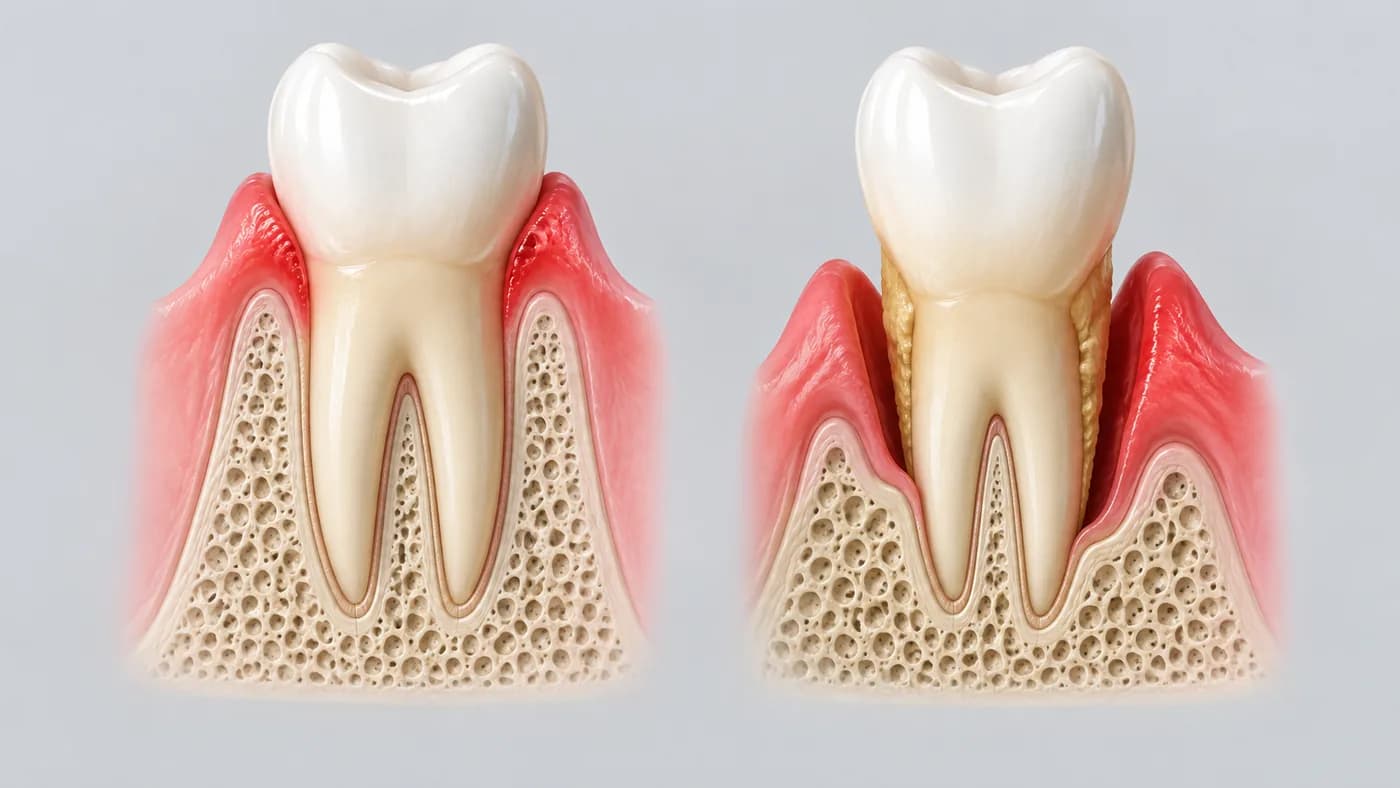
Gingivitis affects the gums, while periodontitis can involve loss of the tissues and bone supporting teeth. Bleeding alone cannot show which condition is present; a dentist assesses the gums and uses imaging when needed.
Compare at a glance
Gingivitis and periodontitis compared
Aspect
Gingivitis
Periodontitis
Area affected
Inflammation of the gums
Loss of tooth-supporting tissue and bone may occur
Signs
Bleeding, redness or swelling may occur
Similar signs may be accompanied by recession or looseness
Assessment
Plaque, tartar and gum condition are checked
Pocket measurements and bone assessment when indicated
Key distinction
Symptoms alone cannot provide a self-diagnosis
Lack of pain does not confirm healthy supporting tissues
Less bleeding does not mean lost support has regrown
With gingivitis, redness and bleeding may improve through plaque control and appropriate professional care. In periodontitis, the supporting tissues have been affected; bleeding stopping does not mean lost bone has returned. Absence of pain also does not exclude disease.
This is why follow-up measurements should be compared with earlier records. Ask which areas still have deep pockets, bleeding or difficulty with cleaning. Have the correct size and technique for an interdental tool demonstrated. Stopping all cleaning because an area bleeds may allow more deposits to accumulate. Tell the clinician about smoking and diabetes. A loose tooth, pus, marked swelling or increasing pain should prompt contact before the next routine maintenance visit.
How is gingivitis assessed?
Plaque-related gum inflammation may cause bleeding and swelling and can be controlled with appropriate care and necessary professional treatment. Natural gum colour varies, so colour alone cannot establish whether someone has gum disease.
What differs in periodontitis?
Assessment looks for loss of tooth-supporting tissues, gum pockets and bone changes. Lack of pain does not exclude disease. Not every case of gingivitis progresses to periodontitis; examination establishes the current condition and relevant risks.
How is treatment chosen?
Cleaning and guidance on daily care are core steps. Deeper treatment or surgery is not required for everyone. The plan follows findings and is reassessed according to response; continue recommended reviews even if bleeding improves.
How does general health fit in?
Diabetes, tobacco use and some medicines matter during assessment. Gum bleeding alone cannot diagnose a separate illness. Associations with other health problems should not be presented as proof of causation; relevant medical care may be coordinated when needed.