Repeated bleeding during brushing, redness or swelling around an implant deserves assessment. An implant cannot develop tooth decay, but the surrounding gum and bone can become diseased. Inflammation may cause little discomfort, so waiting for pain is unreliable.
What is the difference between the conditions?
Peri-implant mucositis affects the soft tissues without disease-related loss of supporting bone. Peri-implantitis combines inflammation with bone loss. Bleeding does not automatically mean peri-implantitis, but should not simply be blamed on a firm toothbrush. Early mucositis can improve with professional care and effective plaque control.
Plaque is a central cause. Previous gum disease, smoking, missed maintenance and blood glucose control in people with diabetes matter when assessing risk. Risk factors alone do not establish a diagnosis.
Which changes should prompt an appointment?
Report repeated bleeding, swelling, discharge, a bad taste or a change in the appearance of the surrounding tissues. Mention movement or discomfort when chewing. Contact the practice rather than waiting for a distant routine visit.
Symptoms immediately after surgery differ from new symptoms around a long-established implant. Follow your surgical instructions and contact the treating team if bleeding or swelling is greater than expected or increasing.
What happens during the examination?
The dentist assesses cleaning access, the restoration and gum tissues. Gentle measurements record bleeding and pocket depths. X-rays may be needed and compared with previous images. One pocket measurement or a photograph alone cannot determine disease severity.
Care may involve professional cleaning, tailored home care and, when bone support is affected, additional treatment or specialist assessment. Review intervals depend on individual risk and response.
What can you do at home?
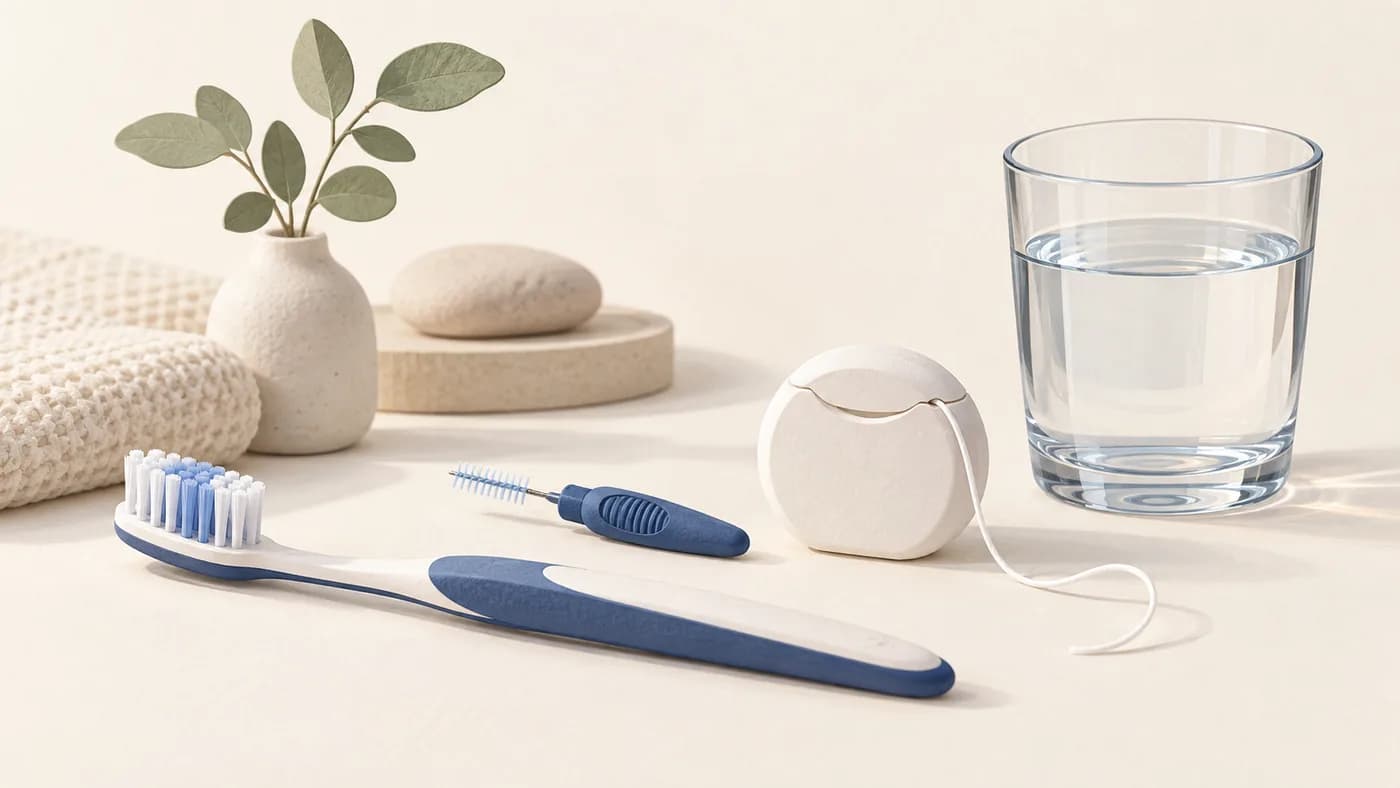
Do not stop all cleaning because the gums bleed. Clean gently and ask which interdental brush size and technique suit the area. Avoid scraping with sharp tools or starting antibiotics or prolonged antiseptic rinses yourself. Home care does not replace necessary professional treatment.
Pus, increasing pain, fever or significant facial swelling needs prompt dental review. Rapidly spreading swelling with difficulty breathing or swallowing requires emergency medical care. Mild brushing-related bleeding alone does not represent that emergency.
Frequently asked questions
Does bleeding mean I will lose the implant?
No. Inflammation may be limited to soft tissues. Examination and, when needed, imaging assess bone support.
If I stop brushing and bleeding stops, is it healed?
No. Avoiding contact does not prove inflammation has resolved. Ask how to clean the area effectively.
Is mouthwash enough?
The cause and plaque control need assessment. If a rinse is appropriate, your dentist should specify its type and duration.
This is general information. For a review in Maltepe, Istanbul, share how long symptoms have lasted and bring previous maintenance records if available.