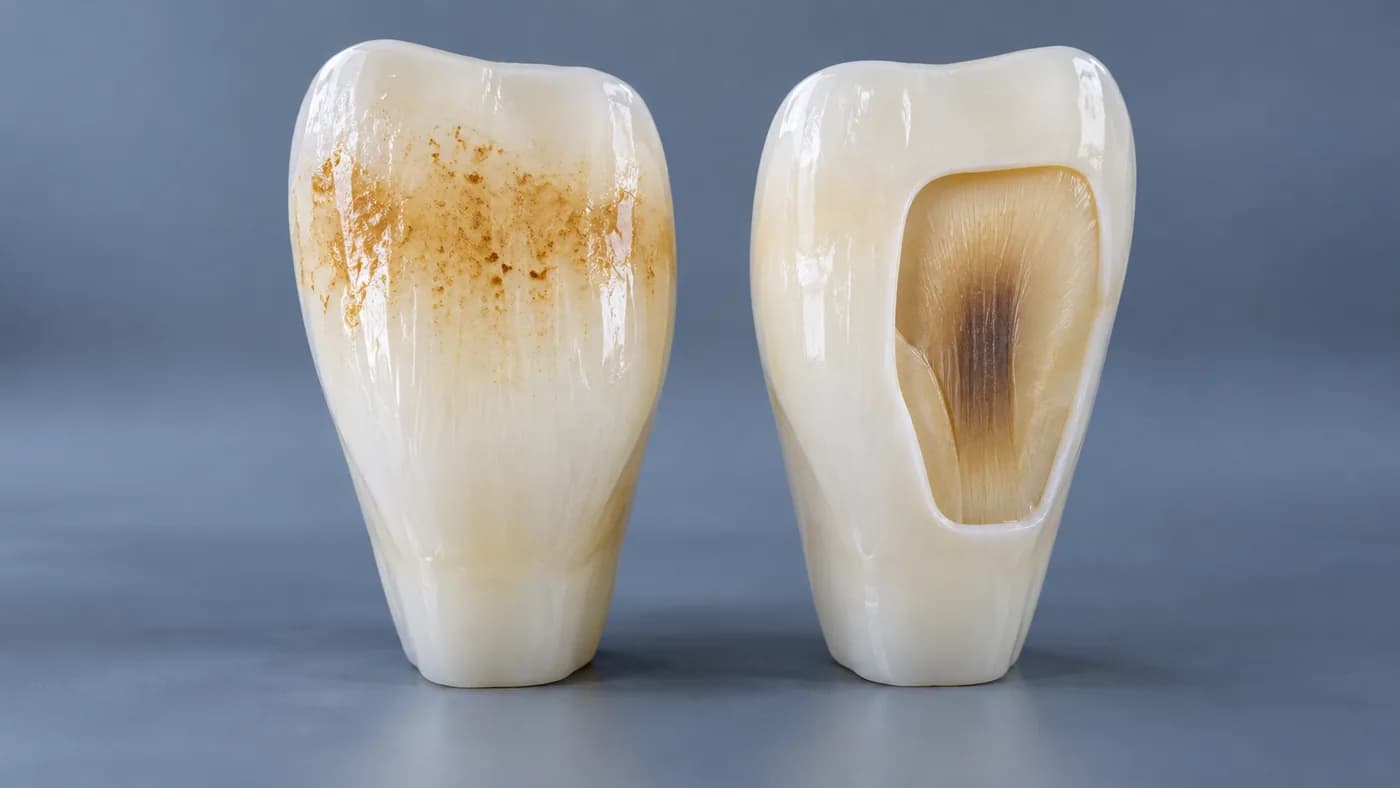
Not all tooth stains respond to the same approach. Surface marks and colour changes within a tooth require different assessment. A newly darkened single tooth, injury or pain should prompt investigation before cosmetic treatment.
Compare at a glance
Stain removal and whitening are different
Situation
Approach to assess
Limit to understand
Surface deposits or stains
Daily care and professional cleaning if needed
May not change the tooth’s natural internal colour
Internal discolouration of a natural tooth
Investigate the cause; discuss whitening if suitable
Not every colour change responds alike
Crown or filling colour
Review the restoration and colour match
Whitening does not lighten restorations like natural teeth
New darkening of one tooth
History, examination and tests if needed
Do not assume it is only a cosmetic stain
Bring the history of the colour change to the examination
Describe whether one tooth or the whole smile changed, when it began and whether injury or treatment preceded it. Dated earlier photographs may help. Lighting and phone filters alter colour, so photographs should not be treated as a precise shade measurement.
Surface deposits may respond to cleaning, while internal changes can need a different approach. A restoration's own shade may differ from natural tooth tissue; trying to lighten everything with the same product is not appropriate. Ask what the cause is, what the first recommended procedure targets and what its limits are. A newly darkened tooth deserves assessment even without pain, especially after an injury.
Are All Tooth Stains Caused by the Same Reason?
Stains on the outer surface
Colour changes within the tooth
Previous fillings or crowns
Decay or problems affecting tooth vitality
Why cleaning and whitening work differently
Professional cleaning targets deposits and some external stains. Whitening aims to lighten natural tooth colour; existing fillings and crowns do not change shade in the same way.
Decay, an old restoration or a problem with tooth vitality may require a different approach. Explain when the colour changed, which teeth are affected and any previous treatment. Discuss options that preserve healthy tooth tissue, realistic colour changes and possible sensitivity.
Should one dark tooth have the same whitening as all the others?
The reason for that tooth's colour needs assessment first. A product intended for the whole smile may not address the underlying problem in one tooth. A photo alone is not enough to choose treatment.