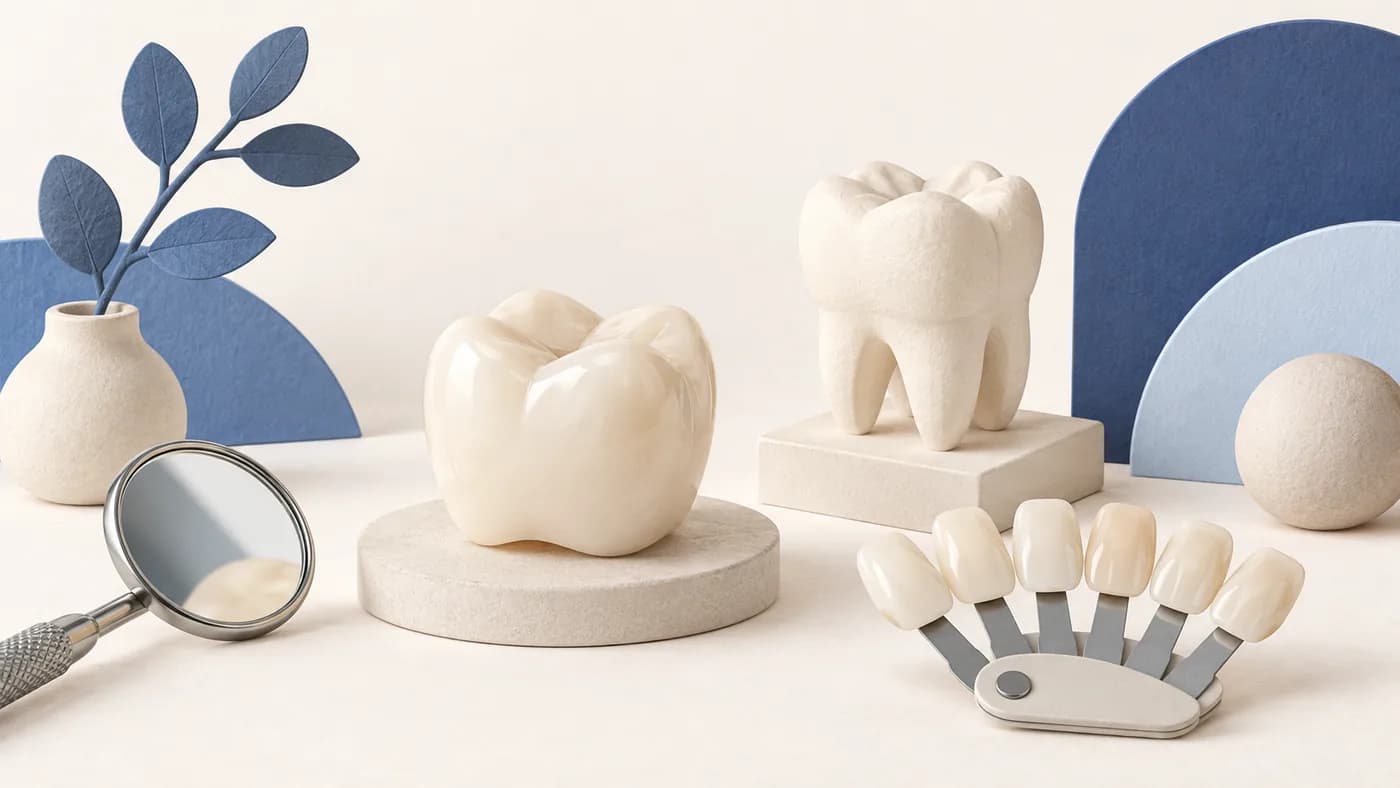
Matching a single crown to neighbouring natural teeth involves more than choosing a shade code. Brightness, translucency, surface texture and variations across different parts of the tooth are considered together. Shade records, accurate communication with the laboratory and an intraoral try-in complement one another. The aim is a restoration that suits the existing smile, rather than the whitest possible tooth.
Why does one tooth need careful planning?
A single crown at the front of the mouth is immediately compared with the natural tooth beside it. The part of a natural tooth near the gum should not be assumed to look the same as its biting edge. Small surface details and the way light is reflected also affect appearance. One number on a shade guide may not describe all of this information.
The examination assesses existing fillings, previous crowns, discolouration and tooth vitality. A dark colour originating inside the tooth may influence the material and plan. Establishing why a tooth looks different is more useful than simply requesting a lighter crown.
Under what conditions is shade selected?
Lighting and tooth moisture matter. Clinical studies show that a tooth’s colour can change when it dries. A lighter appearance after the mouth has been open for a long time may therefore be an unsuitable baseline. The dentist plans the timing and conditions of shade recording accordingly.
Visual shade guides, appropriate photographs and a shade-measuring instrument, where available, can support one another. Their use alone does not guarantee a perfect match. Phone filters, flash and screen settings can alter colour, so a photograph taken at home should not be treated as a precise measurement. You can use it to explain your expectations; the final assessment takes place in the clinic.
The material and the underlying tooth colour
The visible shade of a crown is influenced by ceramic properties, the colour of the tooth beneath it and restoration thickness. The material’s name alone cannot establish that an exact match will be possible. Masking a dark starting colour and reproducing the way a natural tooth transmits light are considered together.
The dentist and laboratory share information about tooth shape and surface features as well as shade. This communication may require refinement. Having a try-in does not indicate that the plan has failed: assessing the appearance inside the mouth is part of treatment.
Discuss the sequence if you are considering whitening
Whitening can change the colour of natural teeth, but existing crowns do not whiten in the same way. If you are considering whitening the other teeth, mention it before the crown shade is chosen. Suitability for whitening, the sequence of procedures and when shade should be reassessed are planned individually.
A list on the internet recommending one waiting period for everyone should not guide your treatment. The procedure performed, tooth condition and your dentist’s assessment are what matter. A later change to a very different natural tooth shade may produce a new mismatch with the crown.
What is checked during a try-in?
Before the crown is permanently placed, shade, shape, margin fit and the bite are assessed. Look at the overall appearance when speaking and smiling as well as at a close-up mirror view. Clearly explain any colour or shape concern at this stage. New records or a laboratory adjustment may be needed.
It is important to keep expectations realistic. An artificial restoration and a natural tooth cannot be promised to look identical under every light. A check is arranged if there is uncomfortable height when biting, persistent sensitivity or a gum problem, regardless of shade.
Frequently asked questions
Does the whitest shade look more natural?
Not always. A single crown’s natural appearance depends on how well it fits the shade and surface characteristics of neighbouring teeth.
Does a shade-measuring device guarantee the result?
No. Its measurement provides supporting information; the material, laboratory work and intraoral try-in are also important.
Can whitening lighten my old crown?
Crowns do not whiten like natural teeth. If there is a mismatch, its cause and suitable options should first be assessed during an examination.