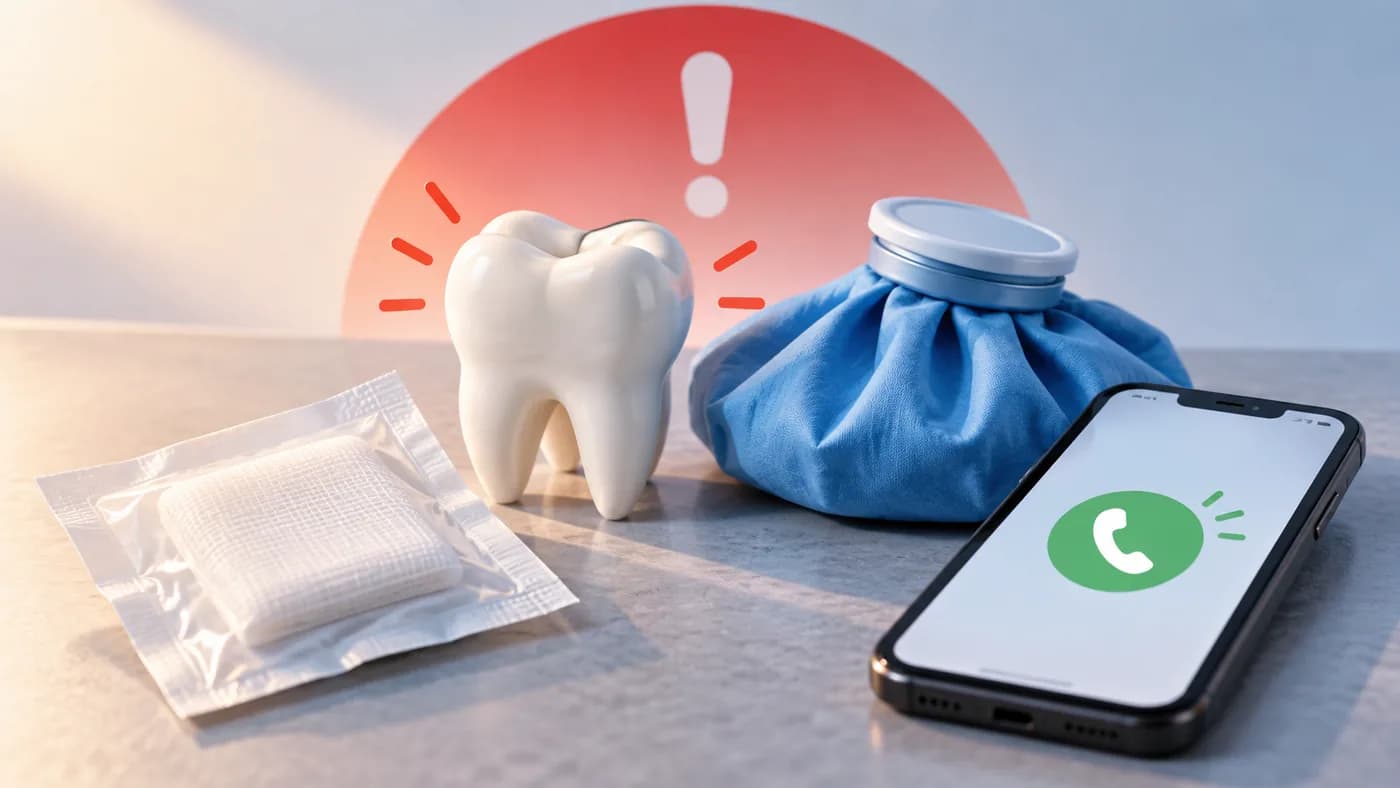
Increasing pain or swelling, bleeding that does not settle or fever after an extraction needs review. Healing varies; seek emergency medical help for difficulty breathing or swallowing rather than waiting for a clinic reply.
Distinguish light oozing from ongoing bleeding
Slightly pink saliva is different from active bleeding that fills the mouth. Repeatedly checking, vigorous rinsing or disturbing the clot may worsen bleeding. Follow the gauze and pressure instructions you received for active bleeding and avoid repeatedly releasing pressure. Bleeding that is heavy, does not stop or causes dizziness needs prompt help.
Pain that increases markedly after initial improvement, a bad taste, fever or spreading swelling needs reassessment. These signs do not prove one diagnosis; examination may be necessary. Do not place medicines, alcohol or herbal substances inside the socket or change prescribed treatment yourself. Report blood-thinning medicines rather than stopping them. Breathing or swallowing difficulty requires emergency medical care.
What information helps when calling?
Note the extraction date, when symptoms worsened and the instructions you were given. Describe changes in bleeding, taste or swelling. A photograph may help communication but cannot examine the socket; attend an advised review promptly.
What Should Be Considered During the First Hours After Extraction?
The first hours after extraction are important for the healing process.
Protecting the extraction area
Following dental recommendations
Avoiding pressure on the area
Maintaining proper oral care
How Should Nutrition Be Managed After Tooth Extraction?
Paying attention to eating habits after extraction can support comfort during recovery.
Avoiding very hot foods and drinks
Being careful with hard foods
Avoiding pressure on the extraction area
Drinking enough fluids
How Should Oral Care Be Done After Extraction?
Maintaining oral hygiene is important after extraction.
However, direct pressure on the extraction area should be avoided.
Continuing regular tooth cleaning
Protecting the extraction area as recommended
Maintaining oral hygiene
Following check-up recommendations
When Should You Contact a Dentist After Extraction?
These sources provide general background and do not replace an individual examination. Appointment, payment and emergency-service arrangements in other countries may differ from those in Türkiye.