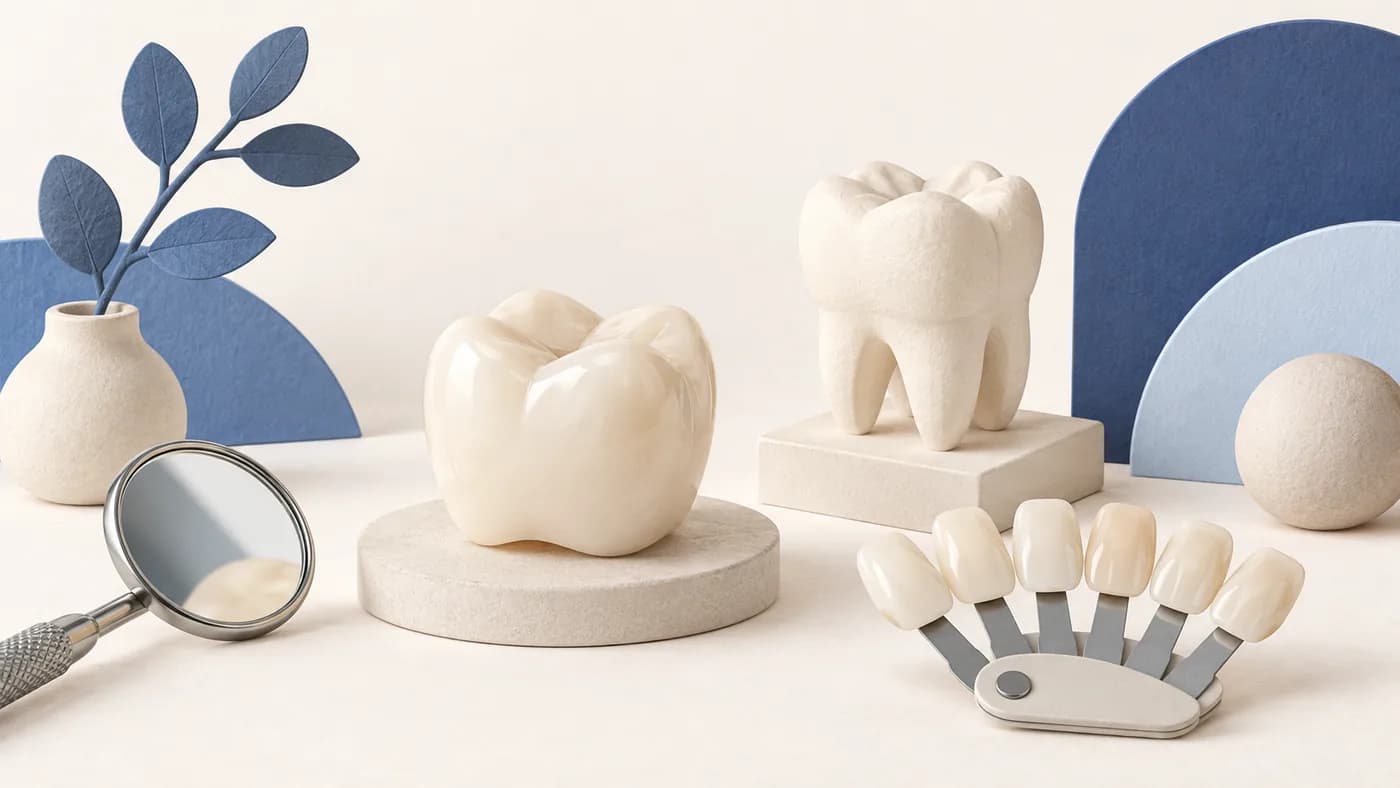
When a large filling needs replacement or part of a tooth breaks, an inlay, onlay or crown may be considered. These restorations cover different areas. The choice depends on remaining sound structure and oral conditions, not just material names or the visible size of the defect.
How do the options differ?
An inlay is made outside the mouth and generally fills a space between the chewing cusps. An onlay also covers one or more weakened cusps. Wider chewing-surface coverage may be called an overlay. Terminology varies, so ask which surfaces the proposed restoration will cover.
A full crown surrounds more of the visible tooth. It may suit extensive tissue loss or a need for broader protection. Small cavities often need only a direct filling, and a large existing filling does not automatically require a crown.
Which findings change the choice?
The dentist assesses the number and thickness of sound walls, support for cusps, cracks, bite forces and the position of restoration margins relative to the gum. Pulp health, previous root canal treatment, surrounding tissues and clenching also matter.
The true defect may only become clear after old filling material or decay is removed. Discuss possible changes to the plan beforehand. Active decay and gum problems need attention as part of planning.
Is less preparation always better?
Preserving sound tissue matters, but leaving a thin unsupported cusp simply to avoid preparation may not provide protection. An onlay can offer suitable coverage while conserving tissue in selected cases; it cannot replace every crown.
Ceramic, metal and composite choices depend on design, location and clinical conditions. No material is best for everyone and no restoration has a guaranteed lifetime. Ask how the recommendation relates to your tooth.
What happens during treatment and follow-up?
After preparation, an impression or digital scan is taken. Production may involve one or several visits, sometimes with a temporary restoration. Fit, margins, neighbouring contacts and bite are checked at placement. Visit count alone does not indicate quality.
Keep the tooth and margins clean. Persistent or new biting pain, marked temperature sensitivity, fracture or movement should be checked. Record when symptoms occur rather than waiting indefinitely.
Frequently asked questions
Is an inlay always better than a filling?
No. A direct filling may be appropriate. An inlay should have a case-specific reason.
Does an onlay require no preparation?
No. Damaged areas and the restoration design may still require preparation.
Does a crown heal a crack?
A cracked tooth does not fuse like a broken bone. Protection may help; outcome depends on the crack's location and extent.
This is general information. For assessment in Maltepe, Istanbul, describe existing symptoms and previous treatments to help compare options.