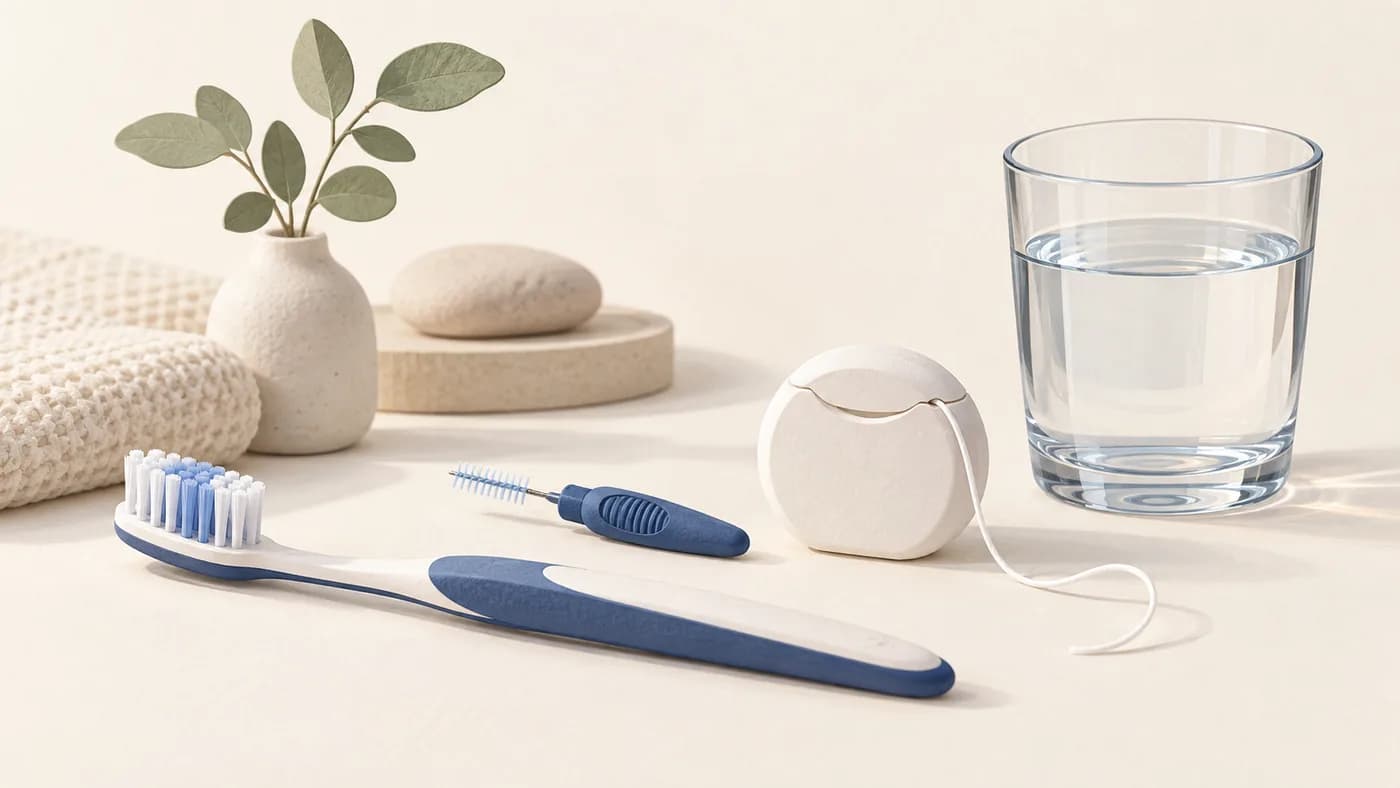
Brushing the visible part of a dental bridge is only part of its care. The underside of the replacement tooth and the edges around supporting teeth also need cleaning. Because bridge units are connected, ordinary floss may not pass down between them. Access is usually from the side, using a method suited to your bridge.
Why the hidden surfaces matter
Bridge material cannot develop decay, but the natural teeth supporting it can, particularly around crown edges. Plaque and trapped food can contribute to bleeding, irritation and odour. Tissues around implant-supported bridges also require care. A painless bridge still needs cleaning; removing visible food alone does not remove all plaque.
Guiding floss beneath the bridge
Brush teeth and bridge surfaces with a soft brush and fluoride toothpaste.
Guide a floss threader or suitable stiff-ended floss through the space demonstrated by your dental team.
Clean the underside and gumline gently, avoiding a cutting movement into the gum.
Clean accessible sides of supporting teeth, then withdraw the floss without tugging.
Make this a daily habit. Ask to practise the technique at your appointment, especially if you cannot see the area clearly. Temporary bridges need their own instructions because pulling firmly may dislodge them.
Choosing other cleaning tools
An appropriately sized interdental brush may help where there is enough space. It should contact surfaces without becoming jammed. Do not force a large brush through a small opening. A water flosser can improve access, particularly with limited hand dexterity. Discuss which tool should clean each area; it does not replace toothbrushing.
Changes that deserve a check
Repeated bleeding, persistent unpleasant taste, food collecting in the same spot or snagging floss should prompt an appointment. Technique, tartar, decay and bridge margins may need checking. Never glue a loose bridge yourself. Increasing facial swelling, fever or severe pain needs prompt assessment; difficulty breathing or swallowing requires emergency help.
When a new bridge is fitted, point out inaccessible areas. Your tools should be comfortable to hold and reach each area reliably.
Frequently asked questions
Should I stop if the gum bleeds?
Stop forceful movements, but do not abandon gentle cleaning. Arrange a check for recurrent bleeding so its cause can be assessed.
Can mouthwash clean beneath the bridge?
Rinsing does not replace physically removing plaque with appropriate tools. Seek individual advice before prolonged antiseptic use.
What if floss will not pass through?
Do not create a route with pins, toothpicks or metal objects. Your dentist can check the design and demonstrate a suitable access point.
This is general information. Bring your usual cleaning tools to an appointment in Maltepe, Istanbul, so a practical routine can be tailored to your bridge.